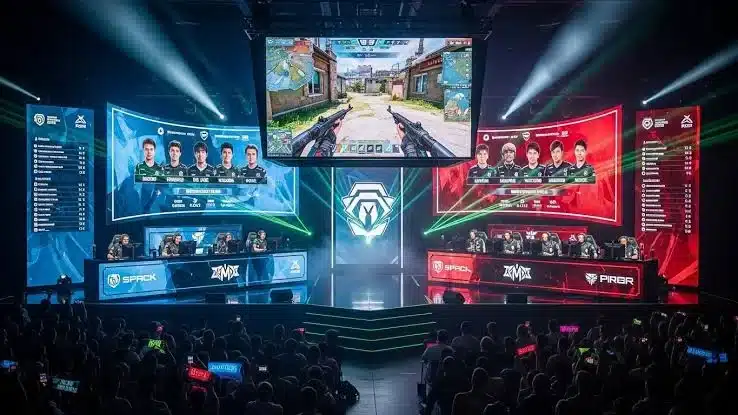
For over a decade, the esports industry functioned like an unchecked digital gold rush. Driven by speculative venture capital, massive non-endemic tech sponsorships, and aggressive tech valuations, competitive gaming rushed to replicate the monolithic structures of traditional sports leagues. Multi-million dollar franchise buy-ins became standard, and expansive, hyper-specialized regional arenas were constructed to anchor global competitive teams.
But structural cracks have forced a hard reset. The era of loose capital is officially over. The industry has entered a vital phase of consolidation, recalibration, and operational maturity.
Today, the evolution of esports infrastructure isn’t defined by building bigger physical stadiums. Instead, it is focused on building sustainable business pipelines, deploying low-latency backend technologies, and creating accessible regional competitive pathways.
1. The Death of Speculative Scale: Shifting to Sustainable Revenue
The foundational business models of esports organizations are undergoing a massive transformation. Investors have shifted their attention away from temporary social media hype and short-term viewership spikes, looking instead for operational resilience and long-term profitability.
+-----------------------------------------------------------------+
|               THE ESPORTS CAPITAL AND REVENUE SHIFT             |
+-----------------------------------------------------------------+
| OLD MODEL (Speculative Scale)   | NEW MODEL (Operational Maturity)|
| * VC-funded cash burns          | * Diversified revenue stacks    |
| * Franchise buy-in debt         | * Digital asset monetization    |
| * Isolated event spikes         | * Always-on content pipelines   |
+-----------------------------------------------------------------+
From Isolated Events to “Always-On” Systems
Historically, esports tournament operators faced a structural hurdle: viewership and public interest would spike dramatically during a major world championship but fail to carry over to the regular season.
To fix this, publishers and leagues are shifting to always-on engagement models. This framework connects the fan experience across a continuous journey, using consistent content pipelines, interactive in-game digital items, and year-round regional tournament structures to maintain steady engagement.
Diversifying the Monetization Stack
Teams can no longer rely solely on basic brand sponsorships or generic merchandise sales. Modern esports infrastructure relies on diversified revenue stacks. This includes:
- In-Game Item Revenue-Sharing: Deep integrations where publishers build team-branded character skins or digital items, splitting digital store revenues directly with clubs.
- Regulated Betting Integrations: As gray-market betting sponsors pull back, mainstream, highly regulated sports betting giants are stepping in to provide stable corporate funding where local regulations allow.
- Bespoke Media Rights Licensing: Utilizing localized web broadcasts and co-streaming networks to monetize content across specific regions.
2. Hardware and Data Infrastructures: The 1000Hz Ceilings
On the technical side, esports infrastructure is pushing the limits of networking and hardware performance to minimize input latency and enhance the spectator experience.
The Input Latency Race
High-level competition is entering the 1000Hz hardware era. Not long ago, a 144Hz monitor refresh rate was considered premium; this quickly evolved into 240Hz and 360Hz standards.
Now, with manufacturers breaking through the 500Hz to 1000Hz ceiling for monitors, graphics processing units (GPUs), and polling peripherals, tournament stages must overhaul their local power configurations, system cooling, and server layouts to ensure reliable frame pacing and near-zero input lag.
Data Shift to the Forefront
Data processing is moving away from basic backend match logging to become a core part of live event entertainment.
By combining artificial intelligence layers with cloud server infrastructure, tournament operators can broadcast automated, real-time match analytics, instantly generate personalized fan highlight reels, and serve up predictive visual statistics directly on-screen during live tournament broadcasts. This transforms data into an engaging tool that deepens viewer interaction.
3. Democratizing the Arena: Mobile and Localized Ecosystems
The physical and regional footprint of esports is moving away from massive, expensive PC-centric setups in favor of accessible, localized alternatives.
[ Traditional PC Setup ]  ---> High Hardware Cost  ---> Centralized Markets
[ Mobile Infrastructure ] ---> Lower Hardware Cost ---> Rapid Emerging Market Growth
The Rise of Mobile Esports Architecture
High-end desktop PCs and dedicated consoles require significant upfront capital. In emerging markets across Latin America, Southeast Asia, and the Middle East, mobile infrastructure has democratized access to competitive gaming.
Because smartphones are highly accessible, games designed specifically for mobile devices now headline stadium-level tournaments, pulling in tens of millions of concurrent live-stream viewers.
Building Local Path-to-Pro Infrastructure
Long-term industry health relies on building equitable, localized developmental pathways. Rather than forcing regional talent to move to established gaming hubs, publishers are creating tight, integrated local league structures.
These pipelines connect grassroots town communities directly to top-tier professional divisions, ensuring a steady stream of fresh talent and stable regional engagement.
Comparative Matrix: Esports Infrastructure Models
To see how these changes alter the operational reality of competitive gaming, let’s look at the operational trade-offs across the ecosystem:
| Infrastructure Metric | The Volatile Speculative Model | The Modern Sustainable Model |
| Primary Financial Driver | Speculative venture capital and unmeasured brand hype. | Diversified income streams, digital item sharing, and sound data governance. |
| Broadcast Delivery | Rigid, one-size-fits-all linear media broadcasts. | Multi-platform co-streaming, localized commentary, and real-time AI data metrics. |
| Hardware Requirements | Expensive, high-end PC towers and proprietary tournament booths. | Cross-platform flexibility and highly optimized mobile league networks. |
| Tournament Cadence | High-intensity, isolated global events with sharp drop-offs in fan attention. | Always-on, season-long competitive narratives with continuous content touchpoints. |
Summary: A Healthier Competitive Landscape
The current evolution of esports infrastructure marks a necessary step forward for the industry. By moving past an unsustainable reliance on speculative investment, the competitive gaming space is professionalizing its core business models.
The future of esports doesn’t depend on chasing raw scale at all costs. It belongs to sustainable, localized operations that use advanced data analytics, adopt accessible mobile platforms, and maintain a consistent connection with their community long after the final trophy is lifted.